- docs/showcase/ai-org.md
- README.md
- ARCHITECTURE.md
- VISION.md
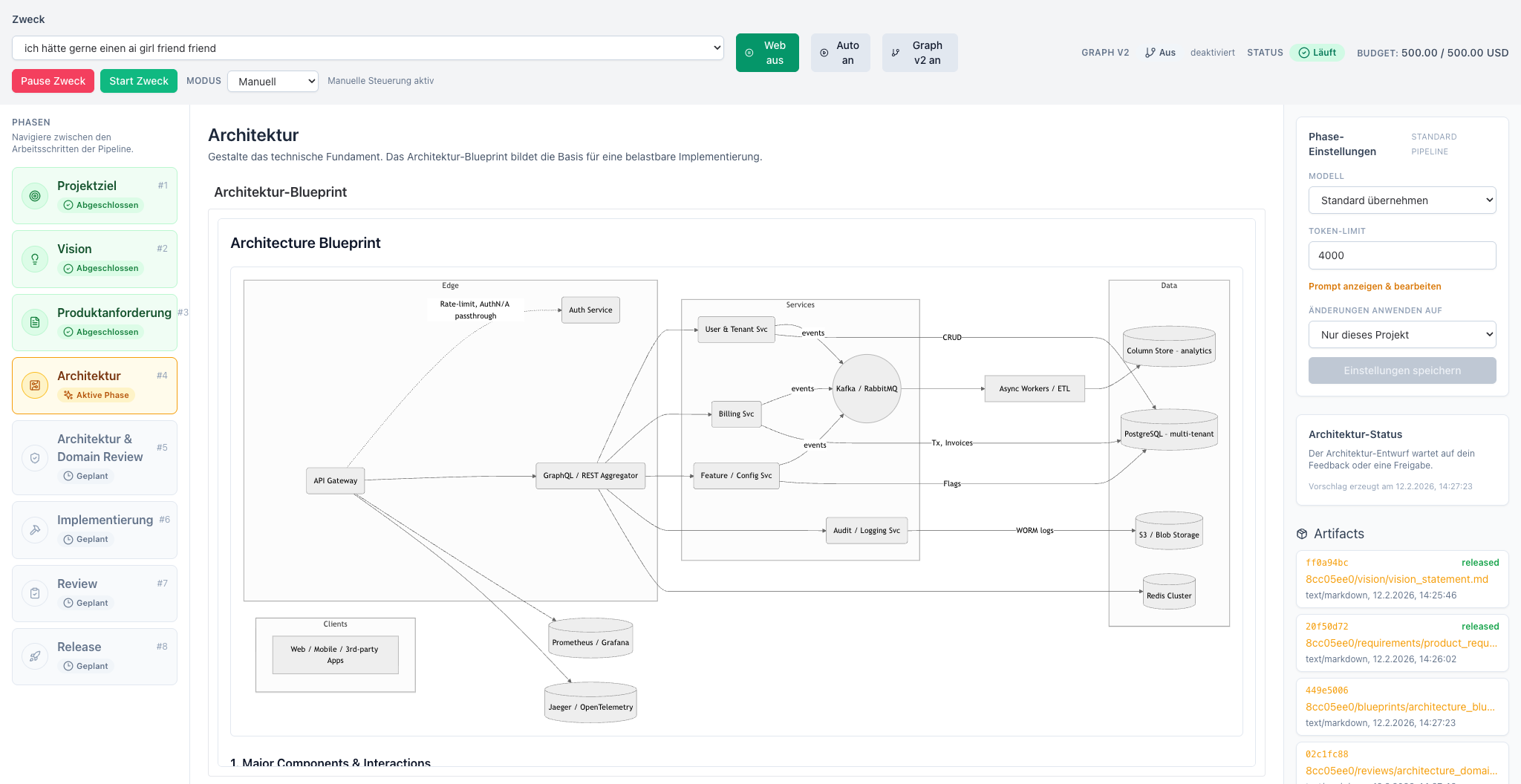
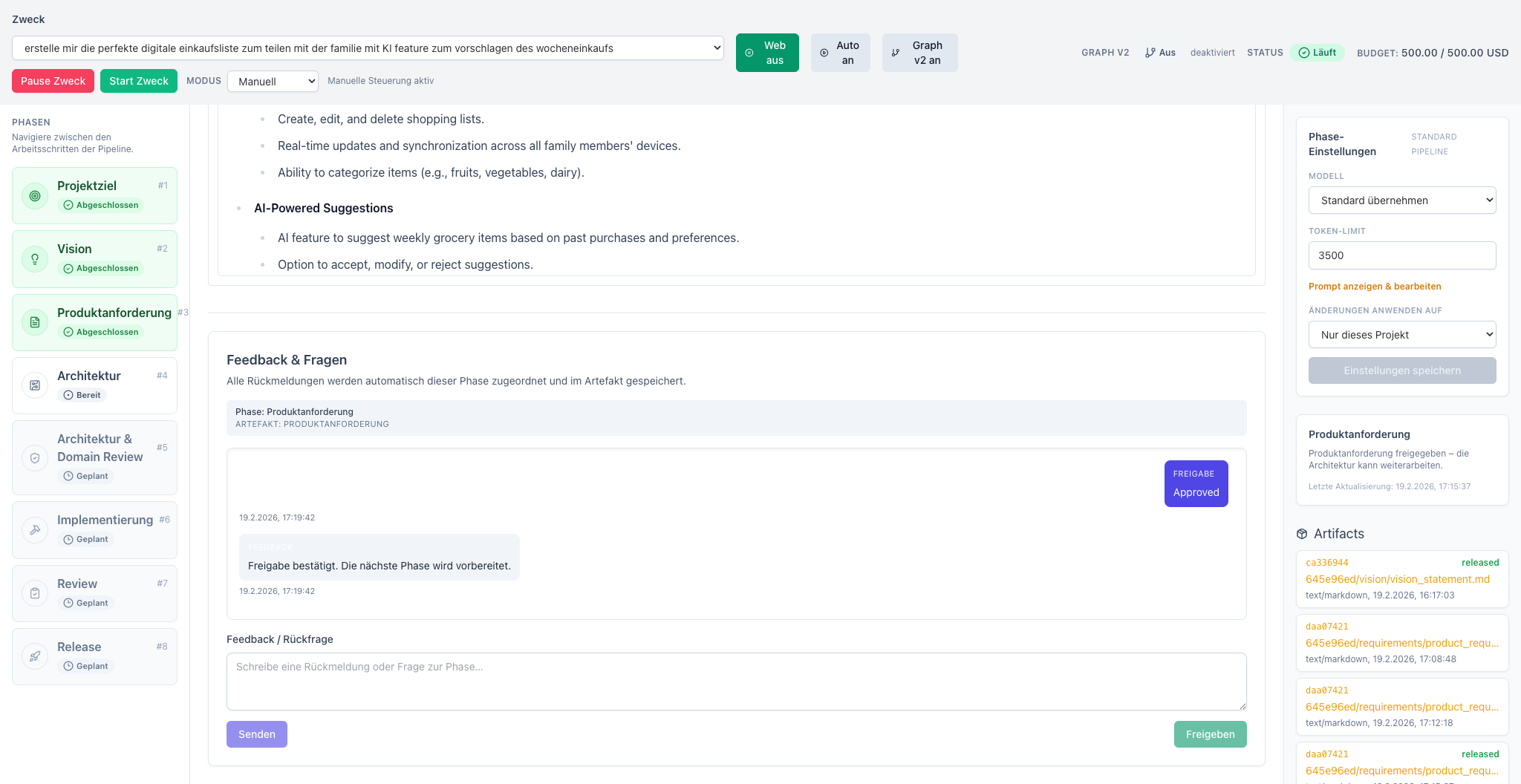
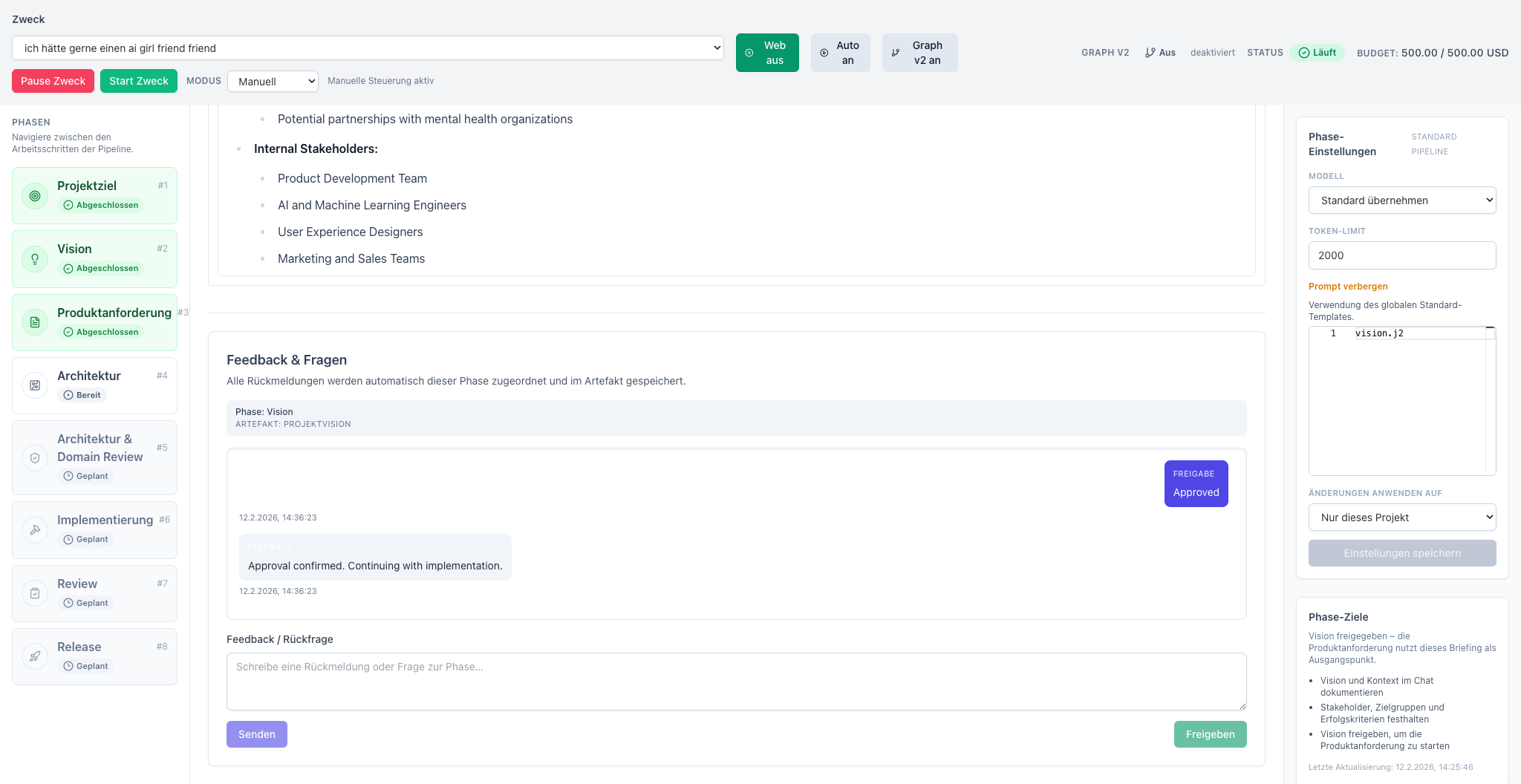
AI-Org experiments with a delivery pipeline where agents propose and humans hold the binding gates.

Pipeline and prompt screens ready


Prototype
Agents propose. Humans decide.
AI-Org demonstrates an agentic delivery pipeline while keeping every binding assessment human-reviewed.
The needed contributions turn a strong prototype into a reviewable demo with a narrow domain.
Without external architecture review, scope will drift. With a narrow spike, AI-Org can show where Contributors needs real review gates.
Short public framing. Internal notes and reviewer comments stay in the audit case.
Lead ask first, followed by secondary missions with capability, status, evidence, and value.
A multi-agent, graph, or orchestration architect who reduces the nine-phase plan around scope, state, eval, and human gates.
Public roles and cleared contribution records for this project.
Human gates, eval boundaries, and evidence requirements are being structured for the AI-Org spike.
The build module: shows how far AI may help before Contributors sets human review and ledger gates.
Nine-phase plan, agent idea, human-in-the-loop doctrine, and strong Contributors coupling.
Narrow pilot domain, state model, eval plan, demo hosting, and UI narrative.
The nine-phase plan and multi-agent idea are described; what is needed is an experienced architecture check that narrows the pipeline.
The surface must show automation soberly: run, evidence, gate, reviewer, not science fiction.
Initiator of Contributors Community and several beta projects; reviewer for governance, product, and AI boundaries.
Defines which pipeline steps are never decided automatically.
Finds a narrow domain for a traceable plan-build-test-ship run.
Reviews prompt, log, and artifact data for privacy and secrecy risks.
Explains AI-Org without autonomy overclaims and with clear review doctrine.
Designs a calm run view for status, evidence, gates, and ledger signals.